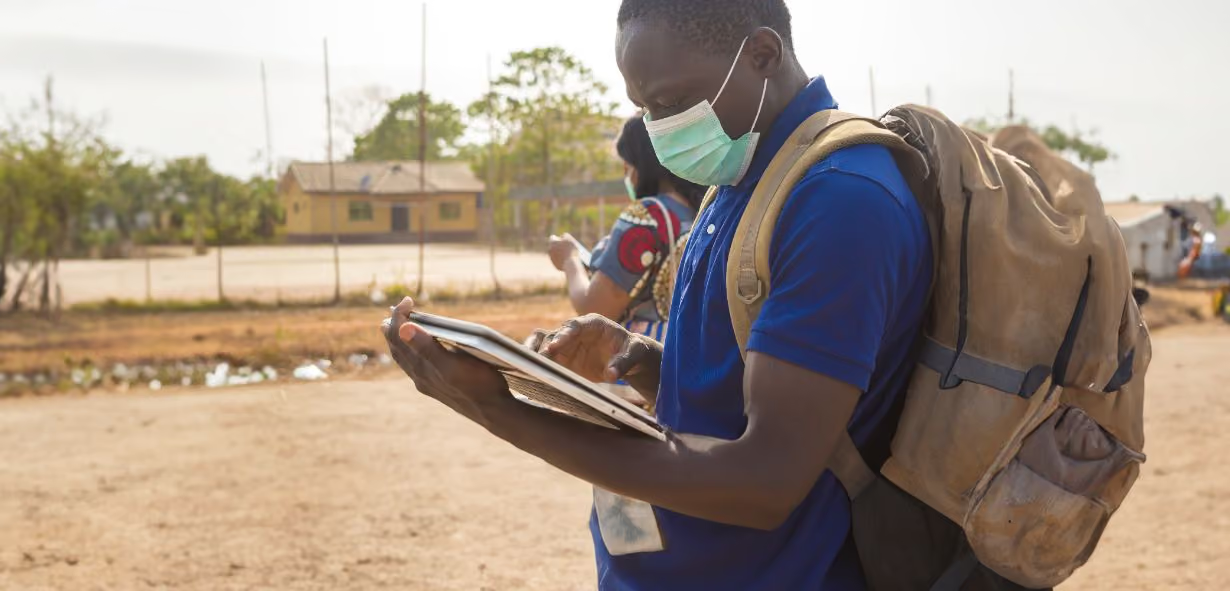
CGHE has supported a broad portfolio of research and partnerships across institutions and disciplines. This database is a window into that portfolio and a tool for finding potential research collaborators.
183
countries of active research
120
collaborating institutions
56
supported projects
81
co-investigators
Projects database
Looking for a research partner or a collaborating institution? Use the filters and map below to explore CGHE’s global network by country, research theme or institution.
Thank you! Your submission has been received!
Oops! Something went wrong while submitting the form.
This collaborative project aimed to explore the unique dimensions of women's empowerment and its relationship to health among indigenous, ethnic minority women in the highlands of Thailand.
Governance, citizenship, and accountability: A study of people-centered development in the Ugandan health sector
In Uganda, communication gaps between local politicians and their constituents are a contributing factor for improved accountability in health service delivery by monitoring local government health.
Mitigating the health and socioeconomic impacts of water intermittency in Mexico
This project aimed to document the patterns and effects of IWS on health, gender, and economic inequality in Mexico by collaborating with the Mexican National Institute of Public Health (INSP).
Sub-saharan Africa university gender-based violence research and prevention network: assessment and interventions for university-based gender-based violence
Gender-based violence (GBV) represents a global public health crisis with severe physical, psychological, emotional, and reproductive consequences, particularly affecting women and girls.
Piloting blood sample collection within a broader population survey in the Chitwan Valley of Nepal
This pilot aims to address health inequities in Nepal’s aging population by testing and improving blood sample collection procedures as part of a new survey on Alzheimer's disease and related dementias (ADRD).
Engaging stakeholders to respond to maternal depression in rural and urban northwestern Ecuador: An applied anthropological approach
Depression among women of childbearing age is a major global public health issue, particularly in low- and middle-income countries (LMICs), where rates of mood and anxiety disorders may be even higher.
Giving voice to post-partum women: Using qualitative methods and user-centered design to generate women-centered interventions to increase birth spacing and boost family planning uptake in Ghana
Our pilot project in Ghana aims to address persistent low family planning uptake among postpartum women by applying in-depth qualitative inquiry and user-centered design principles.
Health technologies are critical in addressing global health challenges, yet many innovations fail to reach those most in need in low- and middle-income countries (LMICs).
Cultural conceptualizations of empowerment among lesbian/bisexual/queer (LBQ) women in western Kenya: A participatory approach to survey measure development
This project addressed the pressing issue of health inequities and human rights violations faced by lesbian, bisexual, queer women, and other sexual and gender minorities (SGM) assigned female sex at birth.
Linking design research for passive cooling strategies in self-built homes with low-income communities to improve health outcomes from extreme heat
This project merged the efforts of three pre-existing teams from Brazil, Burkina Faso, and Colombia to address climate change adaptation through passive cooling interventions in low-income housing.
R2CT (rationalizing and reducing the cost of running randomized controlled trials in low resource settings) via a case study in intermittent parp inhibitors for ovarian cancer in India
This project aims to address the significant gap in cancer treatment regimens between high-income countries (HICs) and low- and middle-income countries (LMICs).
Gender-based violence in digital spaces: Measuring and exploring exposure among university students in Pakistan
This project seeks to explore and address the pervasive issue of gender-based violence (GBV) in digital spaces, a modern public health crisis that disproportionately impacts women, girls, and individuals with disabilities, causing serious health, social, and economic repercussions.
A pilot study to assess the sexual, reproductive, and mental health educational needs among healthcare providers and refugee women in Lebanon
This pilot project aims to assess the knowledge gaps in reproductive and sexual health (RSH) and its relation to mental health among refugee women and healthcare providers in Lebanon.
This project investigates the causes, consequences, and drivers of climate-influenced diseases among pastoral populations in southern Kenya's drylands, focusing on Anthrax, Typhoid Fever, and Giardia.
Integrating climate change and geospatial analytics into next generation surveillance of epidemic prone disease in Ghana
This project seeks to address the high burden of meningitis and yellow fever in Ghana by developing climate-sensitive risk maps and geospatial early warning systems to enhance disease surveillance.
Improving early identification of neonatal jaundice using a hand-held “bili-ruler” in northern Ghana
Neonatal jaundice, a common condition that is easily treatable with light-based therapy if identified early, poses significant risks in low-resource settings like Ghana.
Exploration, adaptation, and pilot testing of a male-engaged group family planning intervention in nakivale refugee settlement, Uganda
This project aims to enhance family planning among refugees in the Nakivale refugee settlement in Uganda by involving men and promoting joint decision-making within couples.
This project aims to improve vaccine equity among children in urban Kenya and rural Uganda by developing a parent/caregiver-facing digital vaccine card and registry.
The Trusted Faces, Familiar Places project aimed to enhance vaccine equity in Aceh, Indonesia by addressing trust and accessibility issues around vaccination services.
Assessing flooding impact of households within the rakai cohort in Uganda
The project "Assessing Flooding Impact of Households within the Rakai Cohort in Uganda" is a collaborative initiative between the University of Michigan and the Rakai Health Sciences Program.
Implementation of cost-effective nutrition strategies to improve metabolic health effects associated with informal electronic waste recycling
This pilot project addresses a critical health equity issue in Agbogbloshie, a community in Accra, Ghana, long known for its informal electronic waste (e-waste) recycling activities.
Building a locally informed climate and health data infrastructure in Bangladesh
This project aims to strengthen the global evidence base on climate change, vulnerability, and health by piloting and validating a climate shock survey in Chakaria–a coastal region.
Strengthening community research capacity to promote health equity in Kenya: The Imarisha initiative
Community-based organizations (CBOs) in low- and middle-income countries (LMICs) play a critical role in providing health services and programs to marginalized and vulnerable populations.
Addressing technology-facilitated gender-based violence among university students in Pakistan
Gender-based violence (GBV) is a global public health crisis, with one in three women and girls experiencing intimate partner violence or non-partner physical or sexual violence during their lifetime.
Understanding pesticide mortality and poisoning in Brazilian children: Informing policy and enhancing communication on childhood exposures
Brazil's intensive pesticide use, weak regulatory enforcement, and continued use of highly toxic chemicals have created critical environmental and public health concerns.
Infusion evolution: Exploring and refining a novel solution to provide rate-controlled medication infusion in Ghana
Intravenous (IV) administration is crucial in modern medical practice for delivering medications, fluids, and nutrients with precision, particularly in life-threatening emergencies.
Exploring social and gender inequities of intentional injury-related mortality in Botswana: Surveillance solutions to support national prevention strategies
Intentional injury mortality, including suicide and homicide/femicide, is an increasingly serious yet understudied public health problem in lower-middle-income countries (LMICs).
Climas cruzados: A comparative study of climate-related health risks, perception, and adaption in informal settlements across the Colombian climate gradient
Residents of informal settlements in Latin America face compounding climate-related health threats that are intensifying as temperatures rise globally.
Utilizing health information for meaningful impact in East Africa through data science (UZIMA-DS)
Young people in East Africa face a critical and often overlooked health burden shaped by the intersection of rapid demographic growth, limited health infrastructure, and insufficient data systems to guide timely intervention.
Longitudinal study of health and aging in Kenya (LOSHAK)
Africa is aging. While the continent is home to the world's youngest population today, adults over 60 are expected to grow from 5.6% to over 15% of Africa's population by 2050—a demographic transformation that will reshape health systems, social structures, and economic policy across the region.
Automated quantitative ulcer analysis: Diagnosing fungal organisms for corneal ulcers
This project develops AQUA (Automated Quantitative Ulcer Analysis), a free, open-source deep-learning algorithm to help clinicians in low-resource settings identify fungal organism types in microbial keratitis.
Context assessment for a standardized approach to creating a federated surgical database using clinical data from electronic health records
This project lays the groundwork for a federated surgical database in Rwanda by assessing the feasibility of standardizing surgical data extraction from electronic health records.
TABRIE-BRIGHT: Empowering people living with hiv through digital assistance and telehealth in a high-stigma region of Ondonesia
This project develops a digital assistance and telehealth platform to support people living with HIV in Aceh, Indonesia, a region marked by high stigma that discourages testing, treatment and retention in care.
Feasibility and acceptability of an integrated family care model to improve newborn care in Kenya (FICare Kenya)
This project assesses whether an Integrated Family Care model can be adapted to improve newborn care in Kenya. FICare brings parents and families into the care of small and sick newborns.
Ecorazón: A community intervention to reduce stress and enhance resilience among women in Esmeraldas, Ecuador
This project develops a culturally responsive mental health intervention for childbearing women with young children in Esmeraldas, Ecuador, adapting the Mom Power model to the local context.
Integrating the HIV testing cascade into the cancer care pathway at Kenyatta National Hospital cancer treatment centre: A pilot study
This project pilots an approach to close a gap in care for cancer patients who are systematically missed by standard HIV testing. At Kenyatta National Hospital's Cancer Treatment Centre.
Verification and validation of a device for urine-based human papillomavirus (HPV) screening to reduce cervical cancer in low-resource settings
This project verifies and validates a low-cost device for urine-based screening for human papillomavirus, the cause of most cervical cancers, with an initial focus on Ghana.
Towards EQUITable oncology: Identifying needs and designing sustainable interventions for adolescents and young adults with cancer in sub-saharan Africa (EQUIT-study)
This project focuses on adolescents and young adults (AYA) with cancer in Kenya, a group whose distinct care delivery needs have not been well described in sub-Saharan Africa.
Equity in the measurement of cognitive function across ethnicity, gender, and education for the detection of Alzheimer's disease and related dementias in Nepal
This project strengthens the tools available to detect Alzheimer's disease and related dementias in Nepal, where cases are rising rapidly alongside an aging population.
The health AI landscape in Lima, Peru: Ethical, legal, and technical considerations for trustworthy implementation of AI tools for chronic respiratory conditions
This project maps the landscape for trustworthy artificial intelligence in health care in Lima, Peru, focusing on tools for chronic respiratory conditions such as tuberculosis.
Strong roots perinatal dialectical behavior therapy: Building capacity and tailoring a mental health and early relational intervention to an urban Mexican context
This project adapts Strong Roots Perinatal Dialectical Behavior Therapy, an evidence-based mental health and early relational intervention, for perinatal women.
Determining the balance between diet quality and sustainability across generations and within a real-world urban Mexico sample
This project examines how diet quality and environmental sustainability can be balanced across generations, using the established ELEMENT cohort in Mexico City.
Addressing pre-analytic variation in digital pathology: U-M and Kenya collaboration
This project tackles the pre-analytic sources of variation that undermine artificial intelligence in pathology when tools trained elsewhere are deployed in new settings.
A global digital cancer diagnostics hub to expand access to high-quality pathology in resource-limited settings
This project develops an international, tumor board-style digital pathology platform to improve the timeliness and accuracy of cancer diagnosis across low- and middle-income countries.
An open pilot trial of an integrated trauma healing and financial literacy program for climate-vulnerable young mothers in Nairobi's informal settlements
This project tests an integrated program that pairs trauma healing with financial literacy for young mothers living in Nairobi's informal settlement.
Vaccine decision making among Bangladeshi nationals, climate internally displaced people, and forcibly displaced myanmar nationals in Bangladesh
This project addressed the critical issue of non-vaccination, under-vaccination, and late vaccination in Bangladesh, particularly among marginalized communities.
Addressing pre-analytic variation in digital pathology: U-M and Kenya collaboration
This project tackles the pre-analytic sources of variation that undermine artificial intelligence in pathology when tools trained elsewhere are deployed in new settings.
Addressing technology-facilitated gender-based violence among university students in Pakistan
Gender-based violence (GBV) is a global public health crisis, with one in three women and girls experiencing intimate partner violence or non-partner physical or sexual violence during their lifetime.
A global digital cancer diagnostics hub to expand access to high-quality pathology in resource-limited settings
This project develops an international, tumor board-style digital pathology platform to improve the timeliness and accuracy of cancer diagnosis across low- and middle-income countries.
An open pilot trial of an integrated trauma healing and financial literacy program for climate-vulnerable young mothers in Nairobi's informal settlements
This project tests an integrated program that pairs trauma healing with financial literacy for young mothers living in Nairobi's informal settlement.
A pilot study to assess the sexual, reproductive, and mental health educational needs among healthcare providers and refugee women in Lebanon
This pilot project aims to assess the knowledge gaps in reproductive and sexual health (RSH) and its relation to mental health among refugee women and healthcare providers in Lebanon.
Assessing flooding impact of households within the rakai cohort in Uganda
The project "Assessing Flooding Impact of Households within the Rakai Cohort in Uganda" is a collaborative initiative between the University of Michigan and the Rakai Health Sciences Program.
Automated quantitative ulcer analysis: Diagnosing fungal organisms for corneal ulcers
This project develops AQUA (Automated Quantitative Ulcer Analysis), a free, open-source deep-learning algorithm to help clinicians in low-resource settings identify fungal organism types in microbial keratitis.
Building a locally informed climate and health data infrastructure in Bangladesh
This project aims to strengthen the global evidence base on climate change, vulnerability, and health by piloting and validating a climate shock survey in Chakaria–a coastal region.
Climas cruzados: A comparative study of climate-related health risks, perception, and adaption in informal settlements across the Colombian climate gradient
Residents of informal settlements in Latin America face compounding climate-related health threats that are intensifying as temperatures rise globally.
Context assessment for a standardized approach to creating a federated surgical database using clinical data from electronic health records
This project lays the groundwork for a federated surgical database in Rwanda by assessing the feasibility of standardizing surgical data extraction from electronic health records.
Cultural conceptualizations of empowerment among lesbian/bisexual/queer (LBQ) women in western Kenya: A participatory approach to survey measure development
This project addressed the pressing issue of health inequities and human rights violations faced by lesbian, bisexual, queer women, and other sexual and gender minorities (SGM) assigned female sex at birth.
Determining the balance between diet quality and sustainability across generations and within a real-world urban Mexico sample
This project examines how diet quality and environmental sustainability can be balanced across generations, using the established ELEMENT cohort in Mexico City.
Ecorazón: A community intervention to reduce stress and enhance resilience among women in Esmeraldas, Ecuador
This project develops a culturally responsive mental health intervention for childbearing women with young children in Esmeraldas, Ecuador, adapting the Mom Power model to the local context.
This collaborative project aimed to explore the unique dimensions of women's empowerment and its relationship to health among indigenous, ethnic minority women in the highlands of Thailand.
Engaging stakeholders to respond to maternal depression in rural and urban northwestern Ecuador: An applied anthropological approach
Depression among women of childbearing age is a major global public health issue, particularly in low- and middle-income countries (LMICs), where rates of mood and anxiety disorders may be even higher.
Equity in the measurement of cognitive function across ethnicity, gender, and education for the detection of Alzheimer's disease and related dementias in Nepal
This project strengthens the tools available to detect Alzheimer's disease and related dementias in Nepal, where cases are rising rapidly alongside an aging population.
Exploration, adaptation, and pilot testing of a male-engaged group family planning intervention in nakivale refugee settlement, Uganda
This project aims to enhance family planning among refugees in the Nakivale refugee settlement in Uganda by involving men and promoting joint decision-making within couples.
Exploring social and gender inequities of intentional injury-related mortality in Botswana: Surveillance solutions to support national prevention strategies
Intentional injury mortality, including suicide and homicide/femicide, is an increasingly serious yet understudied public health problem in lower-middle-income countries (LMICs).
Feasibility and acceptability of an integrated family care model to improve newborn care in Kenya (FICare Kenya)
This project assesses whether an Integrated Family Care model can be adapted to improve newborn care in Kenya. FICare brings parents and families into the care of small and sick newborns.
Gender-based violence in digital spaces: Measuring and exploring exposure among university students in Pakistan
This project seeks to explore and address the pervasive issue of gender-based violence (GBV) in digital spaces, a modern public health crisis that disproportionately impacts women, girls, and individuals with disabilities, causing serious health, social, and economic repercussions.
Giving voice to post-partum women: Using qualitative methods and user-centered design to generate women-centered interventions to increase birth spacing and boost family planning uptake in Ghana
Our pilot project in Ghana aims to address persistent low family planning uptake among postpartum women by applying in-depth qualitative inquiry and user-centered design principles.
Governance, citizenship, and accountability: A study of people-centered development in the Ugandan health sector
In Uganda, communication gaps between local politicians and their constituents are a contributing factor for improved accountability in health service delivery by monitoring local government health.
Implementation of cost-effective nutrition strategies to improve metabolic health effects associated with informal electronic waste recycling
This pilot project addresses a critical health equity issue in Agbogbloshie, a community in Accra, Ghana, long known for its informal electronic waste (e-waste) recycling activities.
Improving early identification of neonatal jaundice using a hand-held “bili-ruler” in northern Ghana
Neonatal jaundice, a common condition that is easily treatable with light-based therapy if identified early, poses significant risks in low-resource settings like Ghana.
Infusion evolution: Exploring and refining a novel solution to provide rate-controlled medication infusion in Ghana
Intravenous (IV) administration is crucial in modern medical practice for delivering medications, fluids, and nutrients with precision, particularly in life-threatening emergencies.
Integrating climate change and geospatial analytics into next generation surveillance of epidemic prone disease in Ghana
This project seeks to address the high burden of meningitis and yellow fever in Ghana by developing climate-sensitive risk maps and geospatial early warning systems to enhance disease surveillance.
Integrating the HIV testing cascade into the cancer care pathway at Kenyatta National Hospital cancer treatment centre: A pilot study
This project pilots an approach to close a gap in care for cancer patients who are systematically missed by standard HIV testing. At Kenyatta National Hospital's Cancer Treatment Centre.
Linking design research for passive cooling strategies in self-built homes with low-income communities to improve health outcomes from extreme heat
This project merged the efforts of three pre-existing teams from Brazil, Burkina Faso, and Colombia to address climate change adaptation through passive cooling interventions in low-income housing.
Longitudinal study of health and aging in Kenya (LOSHAK)
Africa is aging. While the continent is home to the world's youngest population today, adults over 60 are expected to grow from 5.6% to over 15% of Africa's population by 2050—a demographic transformation that will reshape health systems, social structures, and economic policy across the region.
Health technologies are critical in addressing global health challenges, yet many innovations fail to reach those most in need in low- and middle-income countries (LMICs).
Mitigating the health and socioeconomic impacts of water intermittency in Mexico
This project aimed to document the patterns and effects of IWS on health, gender, and economic inequality in Mexico by collaborating with the Mexican National Institute of Public Health (INSP).
This project aims to improve vaccine equity among children in urban Kenya and rural Uganda by developing a parent/caregiver-facing digital vaccine card and registry.
This project investigates the causes, consequences, and drivers of climate-influenced diseases among pastoral populations in southern Kenya's drylands, focusing on Anthrax, Typhoid Fever, and Giardia.
Piloting blood sample collection within a broader population survey in the Chitwan Valley of Nepal
This pilot aims to address health inequities in Nepal’s aging population by testing and improving blood sample collection procedures as part of a new survey on Alzheimer's disease and related dementias (ADRD).
R2CT (rationalizing and reducing the cost of running randomized controlled trials in low resource settings) via a case study in intermittent parp inhibitors for ovarian cancer in India
This project aims to address the significant gap in cancer treatment regimens between high-income countries (HICs) and low- and middle-income countries (LMICs).
Strengthening community research capacity to promote health equity in Kenya: The Imarisha initiative
Community-based organizations (CBOs) in low- and middle-income countries (LMICs) play a critical role in providing health services and programs to marginalized and vulnerable populations.
Strong roots perinatal dialectical behavior therapy: Building capacity and tailoring a mental health and early relational intervention to an urban Mexican context
This project adapts Strong Roots Perinatal Dialectical Behavior Therapy, an evidence-based mental health and early relational intervention, for perinatal women.
Sub-saharan Africa university gender-based violence research and prevention network: assessment and interventions for university-based gender-based violence
Gender-based violence (GBV) represents a global public health crisis with severe physical, psychological, emotional, and reproductive consequences, particularly affecting women and girls.
TABRIE-BRIGHT: Empowering people living with hiv through digital assistance and telehealth in a high-stigma region of Ondonesia
This project develops a digital assistance and telehealth platform to support people living with HIV in Aceh, Indonesia, a region marked by high stigma that discourages testing, treatment and retention in care.
The Trusted Faces, Familiar Places project aimed to enhance vaccine equity in Aceh, Indonesia by addressing trust and accessibility issues around vaccination services.
The health AI landscape in Lima, Peru: Ethical, legal, and technical considerations for trustworthy implementation of AI tools for chronic respiratory conditions
This project maps the landscape for trustworthy artificial intelligence in health care in Lima, Peru, focusing on tools for chronic respiratory conditions such as tuberculosis.
Towards EQUITable oncology: Identifying needs and designing sustainable interventions for adolescents and young adults with cancer in sub-saharan Africa (EQUIT-study)
This project focuses on adolescents and young adults (AYA) with cancer in Kenya, a group whose distinct care delivery needs have not been well described in sub-Saharan Africa.
Understanding pesticide mortality and poisoning in Brazilian children: Informing policy and enhancing communication on childhood exposures
Brazil's intensive pesticide use, weak regulatory enforcement, and continued use of highly toxic chemicals have created critical environmental and public health concerns.
Utilizing health information for meaningful impact in East Africa through data science (UZIMA-DS)
Young people in East Africa face a critical and often overlooked health burden shaped by the intersection of rapid demographic growth, limited health infrastructure, and insufficient data systems to guide timely intervention.
Vaccine decision making among Bangladeshi nationals, climate internally displaced people, and forcibly displaced myanmar nationals in Bangladesh
This project addressed the critical issue of non-vaccination, under-vaccination, and late vaccination in Bangladesh, particularly among marginalized communities.
Verification and validation of a device for urine-based human papillomavirus (HPV) screening to reduce cervical cancer in low-resource settings
This project verifies and validates a low-cost device for urine-based screening for human papillomavirus, the cause of most cervical cancers, with an initial focus on Ghana.
Whether your idea is just taking shape or ready for a full proposal, our team is happy to talk it through with you. Consultation isn't required, but it's available anytime to help with logistics, administrative questions, or scientific development.