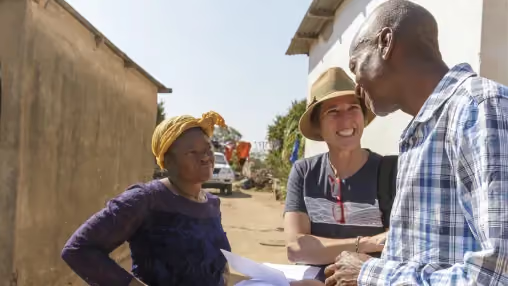
The Center for Global Health Equity is now seeking Fall 2025 applications for both Seed and Impact Accelerator grants, supporting multidisciplinary projects that advance health equity in low- and middle-income countries (LMICs).
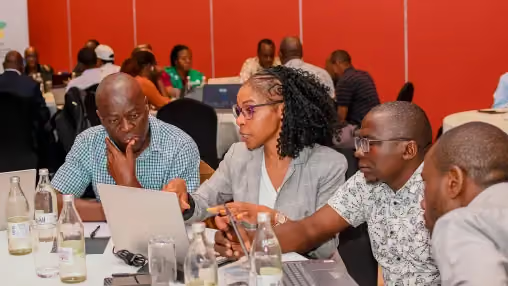
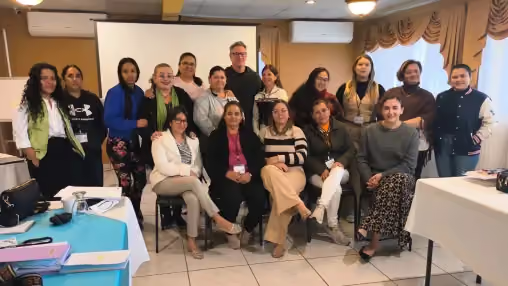
With submission deadlines set in October, both grant mechanisms support multidisciplinary projects with an identified global partner. Seed Grants are intended to support early-stage efforts such as exploring local needs, defining the scope of work, or validating the feasibility of proposed activities. Impact Accelerator Grants are action-oriented projects that aim to design or test practical solutions to pressing health equity challenges in LMICs.
“We are pleased to offer these funding opportunities to faculty seeking to co-create new and meaningful global partnerships,” said Akbar Waljee, MD, MSc, CGHE Director and UMMS Assistant Dean for Global Health Research. “At CGHE, we believe in the transformative power of global collaboration—not only to advance shared goals with our international partners, but to strengthen our own community impact and engagement through mutual learning. We look forward to supporting proposals that unite multidisciplinary teams in advancing health equity both locally and globally.”
U-M faculty in tenure, research, or clinical tracks who are CGHE members are eligible to apply. Those in postdoctoral or staff roles are not typically eligible; however, we welcome potential applicants to reach out with any questions about eligibility.
Seed Grants support early-stage, exploratory work that sparks new ideas, partnerships, or approaches. These projects often lay the foundation for larger-scale research or implementation efforts.
Funding: Up to $35,000
Project Duration: Up to 12 months
Deadline: October 30, 2025
Previous Example: A collaboration between SPH, SEAS, and Social Work is assessing toxic metal exposure and nutritional status among Ghanaian families living close to e-waste recycling centers, where practices like open-air pit burning greatly increase the risk of toxin exposure.
These awards are designed for action-oriented projects that aim to design or test practical solutions to pressing health equity challenges in LMICs.
Funding: $35,000–$100,000
Project Duration: 12 to 24 months
Deadline: October 3, 2025
Previous Example: A collaboration between faculty at the SEAS, SPH, and Engineering is piloting a climate shock survey in Chakaria, Bangladesh—a coastal region highly exposed to extreme weather events—to help understand how climate stressors affect health outcomes in marginalized communities.
Find complete application information on the CGHE website. This year, CGHE has introduced updated application forms and refined review criteria to streamline the submission process and clarify expectations. Prospective applicants are encouraged to review the revised materials carefully.
“At CGHE, we believe in the transformative power of global collaboration—not only to advance shared goals with our international partners, but to strengthen our own community impact and engagement through mutual learning. We look forward to supporting proposals that unite multidisciplinary teams in advancing health equity both locally and globally.”