In our journey to effect lasting change, strategic themes have been pivotal in guiding our programming. These themes serve as a compass, providing clear focus and direction to our activities, ensuring alignment with our core mission. By concentrating on specific areas, we have maximized the impact of our limited resources, developing deeper expertise and delivering more effective solutions. This focused approach has also enhanced stakeholder engagement, fostering increased support and trust from our donors, volunteers, and the communities we serve.
Our adaptability and responsiveness to environmental changes have been strengthened by this strategic focus, allowing us to respond more effectively to evolving societal needs and funding landscapes. Additionally, it has opened doors for more strategic collaborations, amplifying our collective impact through partnerships with like-minded organizations and stakeholders.

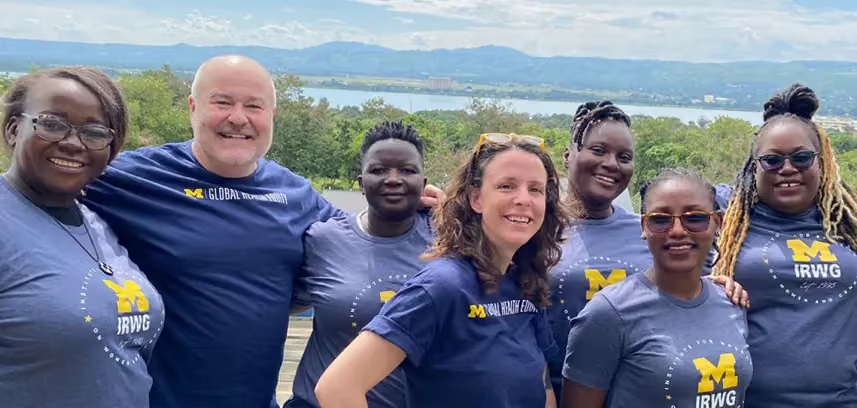
We prioritize and invest in projects that advance the global health equity movement in every way possible— with project sites driven by the long-term relationships held by our members and partners on the ground.We work closely with our collaborators to ensure that they have access to the resources, tools, and expertise necessary for success, tapping into our extensive network of experts and leaders here at the University of Michigan and beyond.

Collaborating with a multidisciplinary team of U-M faculty mentors, each Scholar at the Center for Global Health Equity (CGHE) actively participates in projects that offer a direct line of sight to tangible impact. These projects span across multiple key themes prioritized by the Center, all integral to promoting health equity on a broader scale. Distinct from traditional post-doctoral programs,CGHE’s approach emphasizes this direct impact potential over conventional metrics such as extramural grants, publications, and academic promotions.

This year, CGHE introduced its inaugural Student Organization Global Health Equity Challenge. This multi-month program encourages U-M student organizations to create equitable collaborations aimed at enhancing health and well-being in low and middle-income countries.
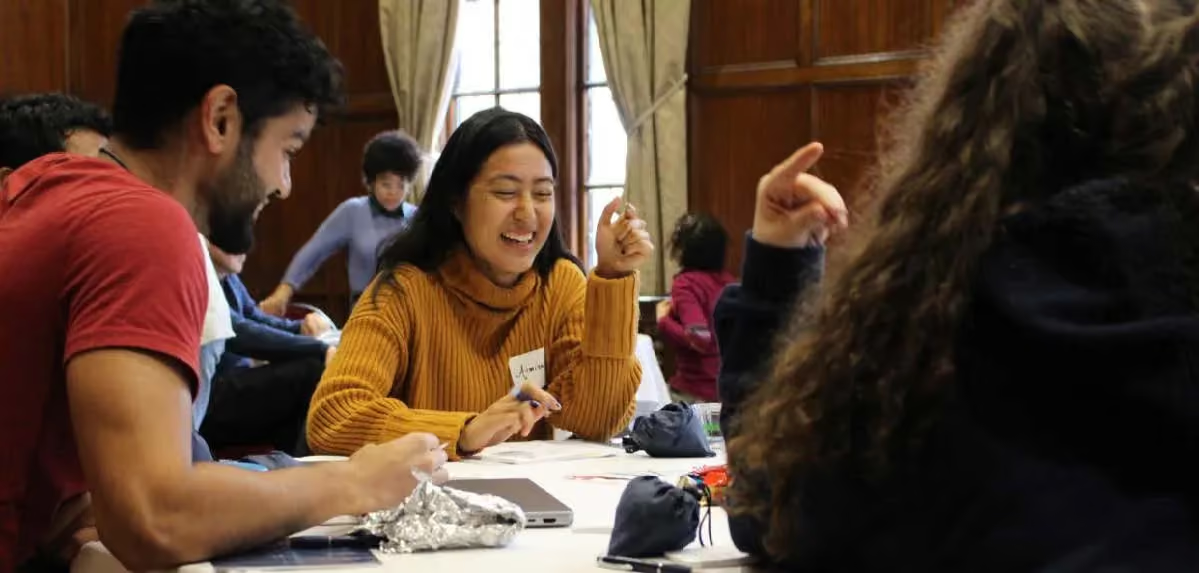
An introductory workshop, held in Ann Arbor onDecember 1, 2023, marked the beginning of the Challenge. The event, spanning four hours, provided students with essential knowledge and tools for crafting effective proposals. The workshop featured interactive learning and discussions, facilitated by trainers from CGHE, The Ginsberg Center forCommunity Service and Learning, and the Taubman Health Sciences Library. Topics covered included sustainable health interventions and community partnerships, with a focus on interactive learning and brainstorming.
Asmita Tuladhar, a participant from student organization M-HEAL Project Mesa, felt that she gained a solid foundation in equitable programming and co-design approaches to use when developing impactful mission work in the future.
Post-workshop, student organizations were invited to submit pitch proposals detailing innovative solutions or interventions to improve health in targeted countries. Finalists will collaborate with CGHE faculty and staff to refine their pitches for a competition event in early 2024. The competition offers up to $5,000 in funding for winning projects and will be judged by a panel of interdisciplinary experts from U-M. Projects will be implemented with ongoing support from CGHE and global partners.

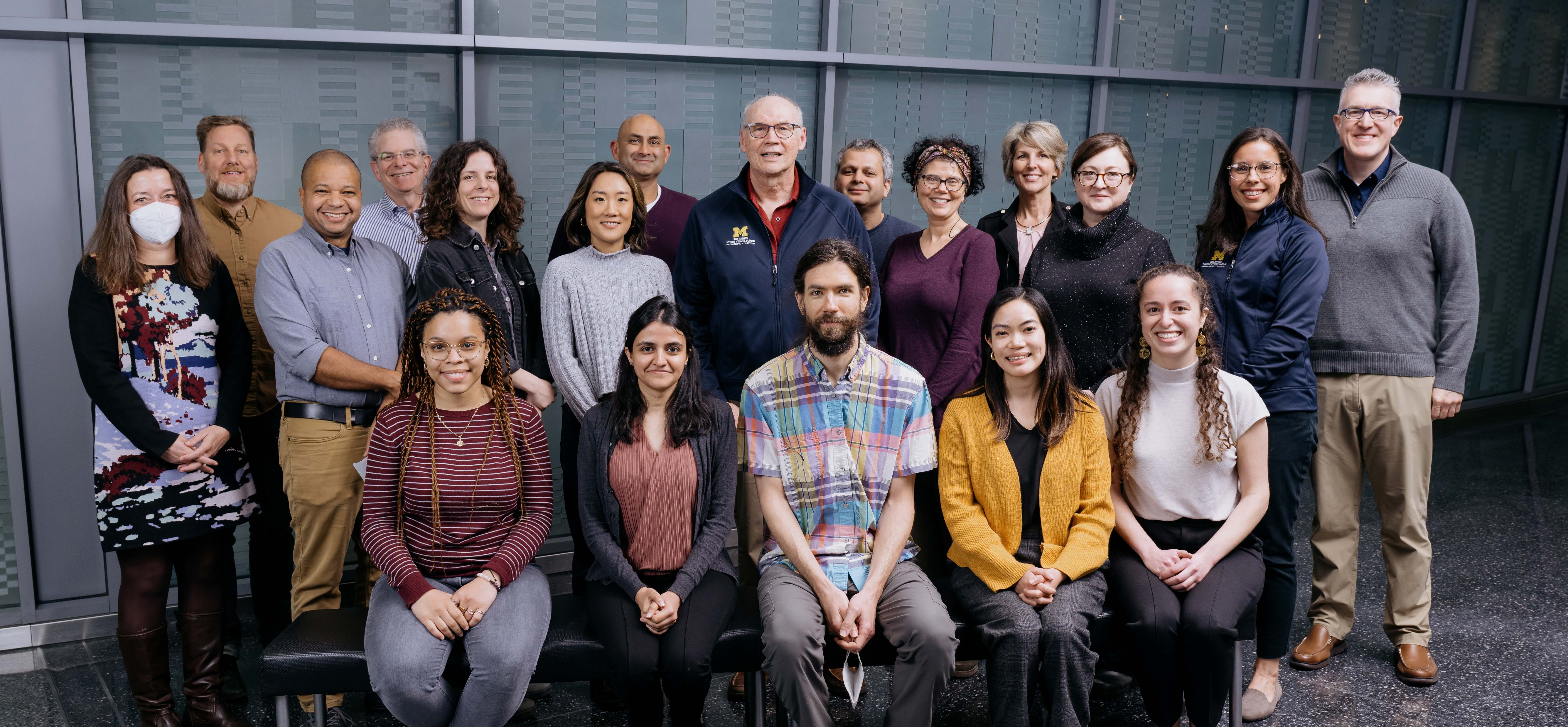
Despite a rapidly shifting funding landscape, center faculty members secured multiple major research awards in 2025 through partnerships spanning Kenya, Brazil, India, and other global contexts—a testament to both the strength of collaborative research design and the behind-the-scenes infrastructure that helped forge these connections. Through seed funding to test ideas with international partners, ongoing mentorship from senior researchers, and strategic matchmaking with institutions like Aga Khan University, the center provided the scaffolding that turns local insights into fundable global research.
CGHE’s grant program supports the field work of early career researchers advancing global health equity in their field.
CGHE proudly marked the first year of grant programming for graduate students at the university. A cornerstone of our mission, this initiative has made significant strides in advancing global health equity. This year, we've supported an even more diverse cohort of scholars from disciplines including Anthropology, Environmental Studies, History, Medicine, Public Health, and Social Work. These early career researchers have undertaken exciting projects, as seen on the next page, that showcase the expansive and multifaceted realm of equity-focused health research.
More than financial support, CGHE has provided a robust framework for professional development. Tailored pre-departure training, ongoing fieldwork support, and reflective post-trip sessions have been integral in equipping our scholars with the tools and mindset to drive meaningful change in global health equity.